Exploring how shifting political narratives in Syria reshape identity, gender roles, and belonging, and how a generation raised amid conflict navigates the struggle over who gets to define the country's future.
Political systems undergoing major transformations experience more than a change in power. It is not only the structure of governance that shifts, but also the story told about society itself. As that story changes, so do the meanings attached to it: Who is the hero? Who is the victim? What constitutes courage? And what is considered a departure from an assigned role? In this sense, identity is not a fixed given, but rather a product of narratives shaped by those who possess the power to speak and to impose their version of events as the “natural” account.
In the Syrian context, narratives have shifted at an unprecedented pace over the course of just a few years. These transformations have not been merely political; they have also altered the very meanings of nationhood, society, and womanhood. With each emerging narrative, the boundaries of acceptable social roles have been redrawn, redefining what is expected of women and what they are permitted to do.
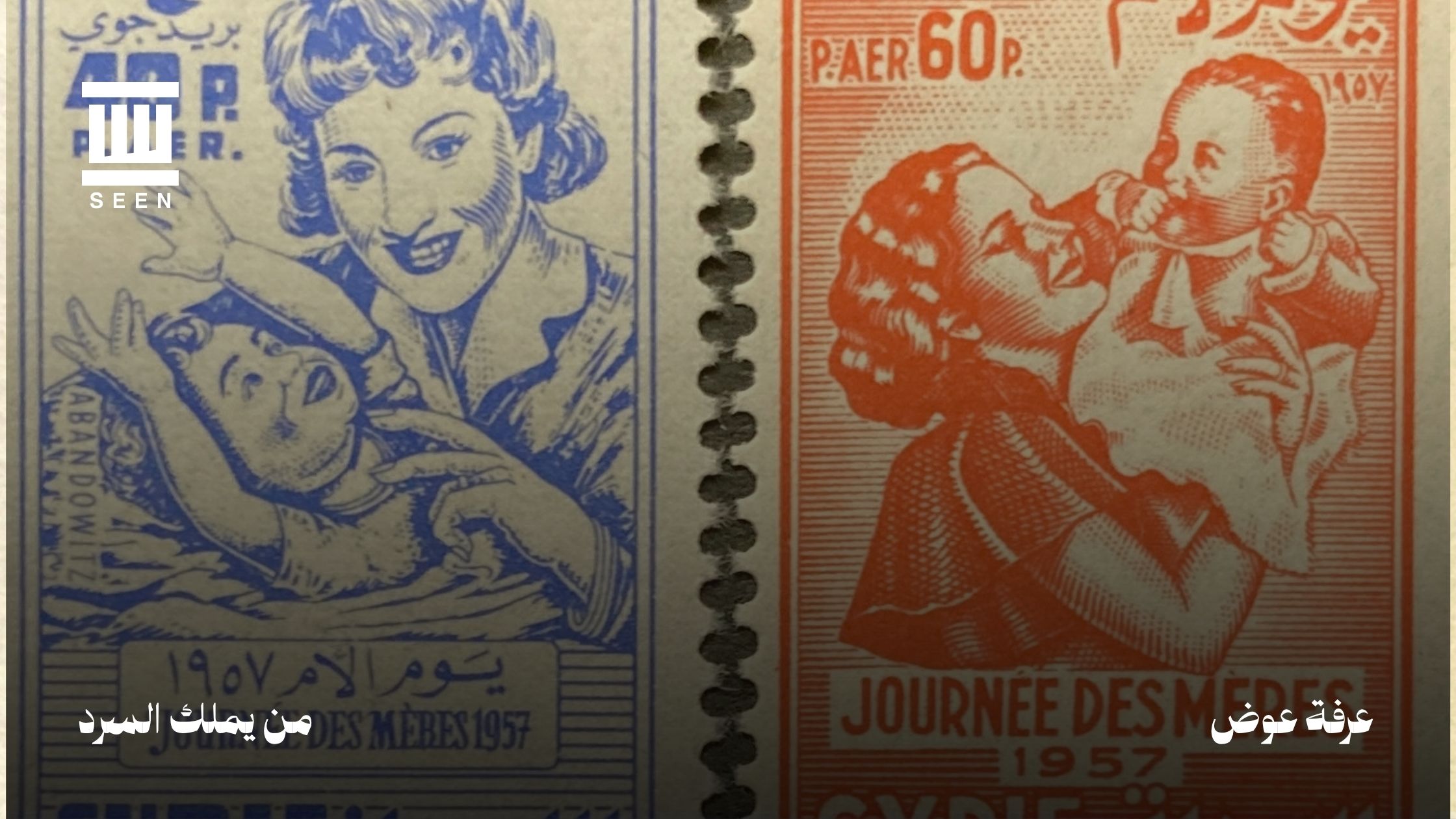
During the years of war, as the discourse of resilience became the dominant narrative, women were portrayed as “mothers of resilience,” their worth measured by their capacity to endure and their roles reduced to coping with loss and sustaining everyday life amid collapse. As humanitarian and civil society activities expanded in certain areas, and local and international organizations and initiatives emerged throughout the prolonged conflict, another narrative took shape: that of the “woman activist,” who was granted a place in the public sphere, albeit within specific moral boundaries. Other narratives subsequently emerged, portraying women as perpetual victims, symbols of collective suffering, or individual stories mobilized to reinforce the legitimacy of a particular political discourse.
Identity Between History and Politics
These transformations are not solely products of the present moment. They draw upon a long history of uncertainty surrounding identity in Syria. The question “Who are we?” is far from new; it is a recurring question that resurfaces at every critical historical juncture.
Since the late Ottoman period, multiple attempts have been made to answer it: Is belonging Ottoman, Arab, Islamic, or Syrian within newly defined geographical boundaries? These answers were not merely theoretical propositions, but competing political and cultural narratives, each seeking to define society and determine the roles of its members.
Following independence in the mid-twentieth century, Syria entered a new phase without a long-established tradition of a consolidated nation-state in the modern sense. Various intellectual and political movements emerged, attempting to answer the question of identity. Yet many of these projects extended beyond the borders of the Syrian state, proposing broader conceptions of belonging: Arab, Islamic, or internationalist. As a result, Syrian national identity appeared to remain in a process of formation, while competing overarching narratives sought to define the horizons of society.
The Danger of Reductionism
As Amin Maalouf argues in his book In the Name of Identity: Violence and the Need to Belong (originally published in French as Les Identités meurtrières), the danger lies not in the multiplicity of affiliations, but in reducing a person to a single identity that they are expected to defend as their only legitimate form of belonging.
In the Syrian context, this idea resonates particularly strongly. Individuals have repeatedly been pressured to define themselves through a single dimension of identity: political, sectarian, ethnic, or regional. With each such reduction, the space for identity narrows, transforming it from something complex and multilayered into a defensive position.
Narrative, therefore, becomes a decisive instrument. Narratives that simplify society into separate, self-contained communities do not merely reflect reality; they actively reproduce it. By contrast, narratives that acknowledge multiple and overlapping affiliations create possibilities for more flexible identities that are less susceptible to becoming instruments of conflict.
This reductionism has affected not only identity in general but also the construction of social roles, including those assigned to women. Nationalist narratives have portrayed women as “mothers of the nation,” revolutionary narratives as “partners in change,” and conservative narratives as guardians of social cohesion. Under each narrative, women's identities have been constructed differently, without ever settling into a single, stable model.
A Generation Raised Amid Transformation
At the heart of this historical moment stands a new generation whose consciousness has been shaped by transformation itself: Generation Z.
Many of its members were children or entering adolescence when the Syrian uprising began. They grew up amid war, disrupted education, displacement, and social fragmentation. Rather than inheriting a stable narrative in the traditional sense, many encountered conflicting accounts of their world: narratives of stability, revolution, war, survival, and reconstruction.
For some, this has produced a sense of identity that is less fixed and more oriented toward the search for meaning. This does not necessarily mean that Generation Z is experiencing an identity crisis. It may also suggest that some of its members have an opportunity to construct their identities in new and different ways.
Historically, generations coming of age toward the end of wars have often shown a greater inclination to participate in reconstruction, having experienced the fragility of their world early in life and recognized that what appears permanent can, in fact, change. Such experiences do not necessarily produce a withdrawn generation. Instead, they may encourage some young women and men to seek alternative ways of living and to reconsider established values, relationships, and social roles.
In Syria, these shifts are visible in concrete initiatives and everyday experiences: young women assuming economic responsibilities within their families following the loss of a primary breadwinner; youth groups reorganizing community life in devastated neighborhoods; and individuals working in cross-border digital sectors that resist classification within traditional social roles.
Even when these individual experiences remain limited in scale, they indicate that the process of redefining identity is already underway, whether or not it receives official recognition or approval.
Today, this generation is expected to participate in reconstruction, despite the fact that many of its members have never experienced a prolonged period of stability. They face a dual task: rebuilding society while simultaneously redefining identity.
For some young women in particular, this responsibility is compounded. They find themselves caught between older narratives seeking to reassert traditional gender roles—such as promoting early marriage as a guarantee of stability, restricting women's responsibilities to family care after years of loss, or questioning their participation in public life—and newer narratives advocating broader engagement in the public sphere, including civil society work, local initiatives, education, and professional employment following prolonged periods of disruption.
Who Gets to Write the Story?
This brings us back to the central question: Who owns the narrative?
If narratives contribute to the formation of identity, then the struggle over storytelling is also a struggle over competing visions of the future. The narrative that gains prominence today may shape how an entire generation is expected to understand itself: as a generation of survivors, a generation of reconstruction, or a generation of change.
Each possible definition may give rise to different understandings of identity and open up distinct possibilities, particularly for young women standing at the threshold of a historical period whose story has yet to be written.
Recent years have brought these accumulated historical tensions to the surface all at once. Identity has become an everyday question: Who are we amid displacement? Amid division? Amid shifting centers of power?
The question is no longer merely intellectual; it has become a lived experience. Amid these rapid transformations, it has become apparent that what is changing is not only people's affiliations, but also the very framework through which they understand themselves. Identity is therefore no longer approached as a fixed given, but as an open-ended process that evolves alongside changing circumstances and the narratives through which those circumstances are interpreted.
Identity is not only what we experience, but also what we attempt to communicate about that experience. As stories change, so do the boundaries within which we navigate our lives and the questions we ask about ourselves.
In Syria today, perhaps the debate is not simply about who holds power, but also about who participates in writing the story, whose voices are heard, and which narratives are allowed to emerge and take shape.
Will we witness a story that reproduces the same social roles under different names, or will more pluralistic narratives emerge, allowing for alternative understandings of identity, particularly among a generation raised in the midst of transformation and whose ways of defining itself remain unresolved?
Translation Note: This article was translated from Arabic into English with the assistance of artificial intelligence (AI). The translation aims to preserve the meaning, tone, and analytical perspective of the original text.